
Rapid prototype tooling for GCC engineering projects
Fast-Turn Injection Molds for GCC Engineering Projects
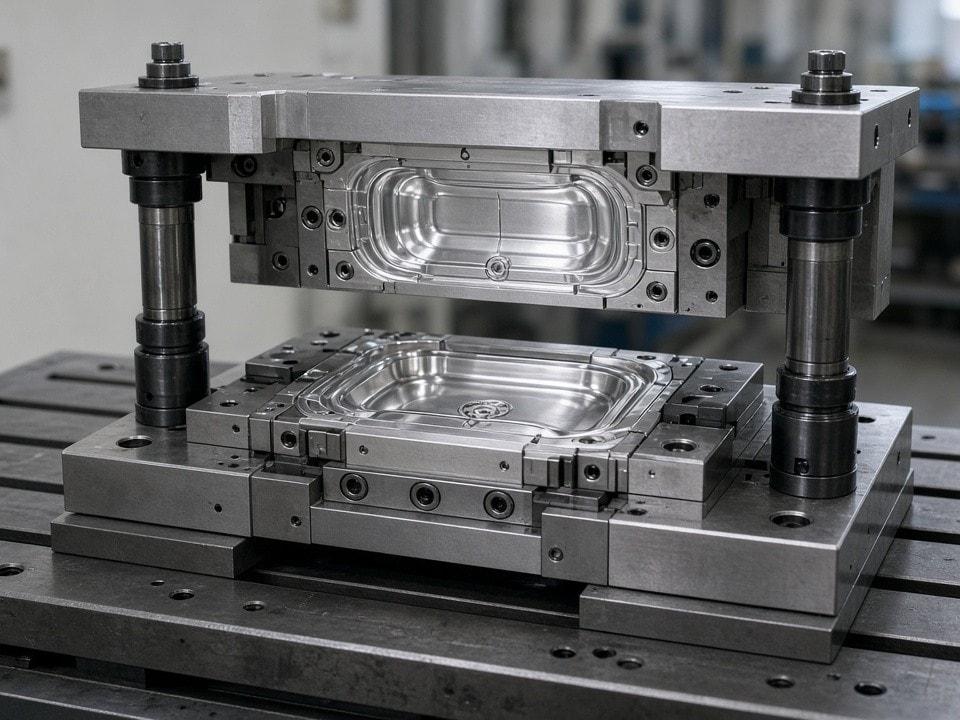
Move from CAD files to real molded parts for fit, function and field validation—without committing to a high-cost hardened production mold too early.
At PartsMake, aluminium 7075 and pre-hardened P20 tooling help Middle East engineering teams receive first T1 shots in a target of 7–14 business days, subject to design-for-manufacture review.
Built for the validation stage
Economical tooling for quantities from dozens of parts to thousands of moulded components.
7–14
Business days to first T1 shots for rapid prototype tooling
50–450
Ton clamp force range for a broad range of engineered parts
GCC-wide
Delivery support for major industrial locations across the Gulf
Rapid tooling routes
Choose a prototype mould that matches your next decision
Fast-turn injection moulding uses a quicker-to-machine tool strategy than conventional high-volume production tooling. It enables testing in the intended polymer before a larger production investment is approved.
Option 01
Aluminium 7075 tooling
A practical choice when rapid design validation, lower initial tooling cost and economical early runs are the priority.
- Typical use
- Fast design validation and lower-volume runs
- Available materials
- ABS, PC, POM-C, PA66+GF30
- Target to first shots
- 7–14 business days
Option 02
Pre-hardened P20 steel tooling
Worth considering when the programme needs greater tool durability or a longer bridge between validation and production.
- Typical use
- Prototype and bridge production
- Available materials
- ABS, PC, POM-C, PA66+GF30
- Target to first shots
- 7–14 business days*
*Timing is confirmed after reviewing part geometry, tool design, material and project complexity.
Designed for the Gulf decision point
Validate the hardware before you commit to hard tooling
GCC engineering teams often need to validate hardware for demanding site conditions without carrying the cost of a full production tool before the design is proven.
-
Validate before investing
Review fit, assembly and function before approving a higher-cost production tool.
-
Test the intended polymer
Assess material-specific behaviour that printed or machined prototypes may not represent.
-
Scale from dozens to thousands
Support custom, low-to-medium volume builds according to tool life and application needs.
-
Coordinate across the GCC
Align drawings, revisions, samples and delivery requirements with engineering and procurement teams.
Application fit
Built for engineered plastic hardware
Typical applications include components for industrial systems, field equipment and project-specific hardware.
Protective, fit-critical enclosures for instrumentation.
Covers and housings for controlled assembly validation.
Parts requiring material and chemical-service review.
Custom components for industrial and electrical systems.
Tell us about heat, chemicals, sand or coastal exposure so we can flag material and design considerations early.
A controlled route to T1
From drawing review to first samples
- 01
Send files
Share the 3D model, drawing, polymer, quantity and application.
- 02
Review DFM
Assess walls, draft, gates, ejection and critical features.
- 03
Confirm scope
Recommend aluminium or P20 and confirm schedule and quotation.
- 04
Build and mould
Manufacture the prototype tool and produce initial shots.
- 05
Review samples
Assess dimensions, fit and function before the next production stage.
Schedule note: The 7–14-business-day target applies to first shots for rapid prototype tooling, not final part approval. Complex geometry, late design changes, special materials or additional sample iterations can affect the overall schedule.
Specialist materials
For higher-temperature or chemical-service applications
Engineering polymer moulding is available with hardened H13 or S136 tooling. Qualified materials include PEEK, PPS, PVDF and glass-filled nylon.
This route typically takes 15–25 business days to first shots, depending on tool design and material requirements.
Quality and GCC delivery support
- Inspection: Agree dimensional requirements before the tool is released; inspection documentation is available according to project scope.
- Critical features: Identify fit, assembly interfaces and tolerances in your RFQ for DFM and sample review.
- Destinations: Riyadh, Dammam, Jubail, Dubai, Abu Dhabi, Doha and JAFZA.
- Shipping: Delivery and customs coordination, including DDP arrangements where agreed.
Frequently asked questions
Practical answers before you release an RFQ
Request a fast-turn quotation
Share your part requirements and target T1 date
We’ll review the part, recommend an aluminium or P20 tooling approach and confirm the proposed scope, schedule and quotation.
- 3D CAD files and 2D drawings with critical dimensions and tolerances
- Preferred polymer or operating environment
- Initial quantity and expected follow-on volumes
- Required T1 sample date and delivery location
- Inspection, labelling or packaging requirements
Contact PartsMake at info@partsmake.ae. Company address: .