
Materials engineered for demanding service
PartsMake High-Performance Polymers
For hot, arid operating environments and aggressive chemical service, the right engineering polymer can replace metal components with lighter, corrosion-resistant alternatives. PartsMake machines PEEK, PTFE, PVDF and POM-C parts for industrial applications across the GCC, with process controls designed around each material’s behaviour.
Reduce mass
Lighter component design
Where design conditions allow, polymer components can reduce assembly weight compared with metal and help simplify handling in equipment, skids and service systems.
Resist corrosion
Designed for fluid exposure
Selected polymers can avoid the corrosion mechanisms affecting metal parts in compatible chemical, saline and process-fluid environments. Compatibility is reviewed against the actual service conditions.
Control wear
Consider friction and creep
Wear resistance, friction behaviour and long-term deformation under load vary by polymer. Material selection balances these properties with temperature, pressure and the intended service life.
Material selection
Choose for the service conditions, not just the material name
The best fit depends on the complete operating picture: temperature range, chemical concentration, contact surfaces, loads, movement and dimensional requirements. These common engineering polymers offer different performance profiles.
Strength at elevated temperatures
A high-performance option for precision parts requiring a combination of mechanical strength, wear performance and chemical resistance. Confirm the grade and conditions against the application.
Typical considerations: bushings, seats and instrument components.
Low friction and broad resistance
Often considered for sliding, sealing and fluid-contact duties. Because PTFE can deform under sustained load, design support and operating limits matter for dimensional stability.
Typical considerations: seals, liners and low-friction interfaces.
Chemical-service components
A candidate for components exposed to a range of corrosive fluids. Suitability depends on the specific chemical, concentration, temperature and exposure duration.
Typical considerations: fluid-handling and chemical-process parts.
Dimensional stability and machinability
Useful for accurately machined components where low friction and stable dimensions are priorities, subject to the material’s temperature and chemical limits.
Typical considerations: guides, rollers and precision spacers.
Precision machining
Manage heat and movement during micro-precision machining
Engineering plastics respond to cutting heat differently from metals. Their lower thermal conductivity and higher thermal expansion can cause local temperature build-up, workpiece movement or size variation if the machining sequence is not controlled.
PartsMake plans turning and milling around the polymer grade, geometry and tolerance requirements. The aim is to limit heat input and residual stress while allowing the component to stabilise before final dimensions are verified.
1. Review the drawing
Identify critical fits, thin walls, unsupported features and tolerance relationships before selecting the machining route.
2. Control cutting heat
Use material-appropriate tooling, sharp cutting edges and considered feeds and speeds to avoid unnecessary heat and stress.
3. Support the workpiece
Plan clamping and machining sequences to reduce distortion, over-compression and deflection on slender or complex parts.
4. Stabilise and inspect
Where the part and tolerance call for it, allow thermal stabilisation between operations and verify critical dimensions after finishing.
From prototype to production
Polymer components made for real operating requirements
Share the part drawing and service conditions for an application-led review. We can assess material choice, machinability, critical dimensions and inspection needs before production proceeds.
Request an engineering reviewIndustrial and fluid systems
Explore suitable polymer alternatives for wear components, seals, guides and fluid-contact parts used in process equipment, pumps and skids.
Regional service conditions
Discuss heat, dust, seawater exposure and chemical duty found across GCC operating environments, with selection based on the actual application.
Dimensional verification and traceability
Inspection planning can include critical-dimension verification and material documentation appropriate to the specified polymer and procurement requirements. Requirements are agreed as part of the quotation and order review.
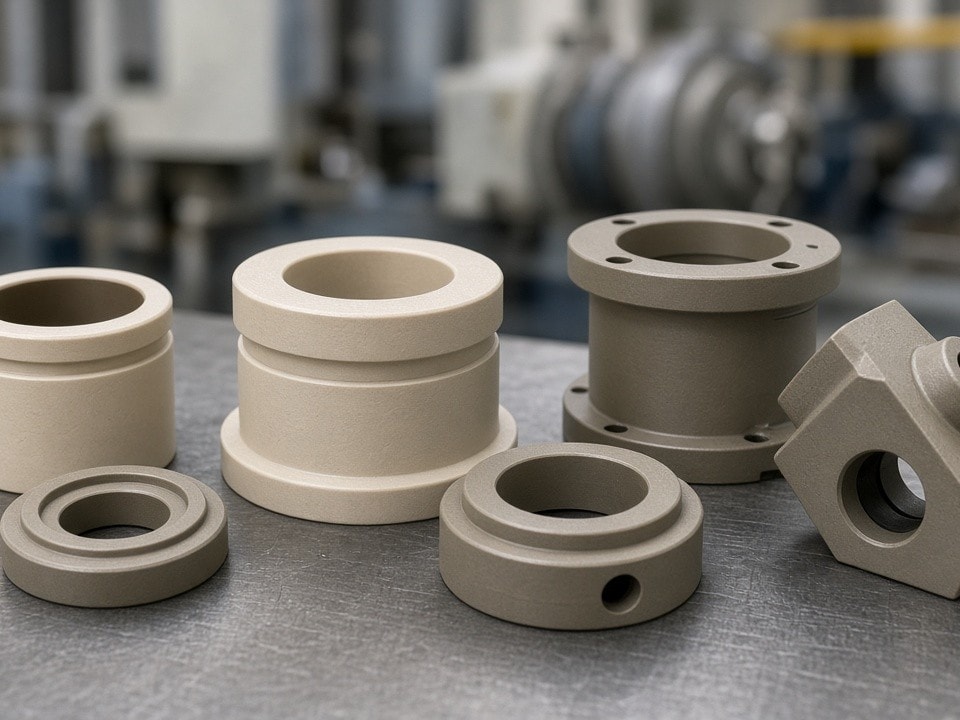
Virgin & Glass-Filled PEEK Machining for GCC Applications
Source precision-machined virgin and glass-filled PEEK components for GCC energy and industrial systems, with material traceability and inspection support.
View details →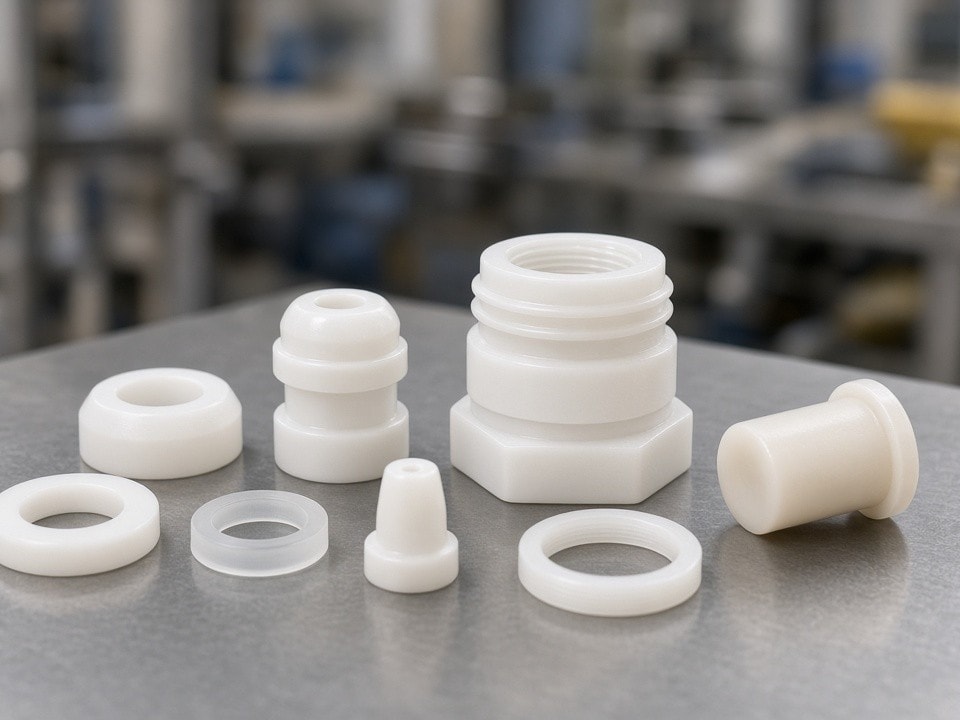
PTFE & PVDF CNC Machining for Desalination and Chemical Systems | PartsMake
Specialised low-temperature CNC turning and milling of PTFE and PVDF components for high-purity fluid handling in GCC desalination and acid processing plants. Request a quote for metering pump parts and valve cores.
View details →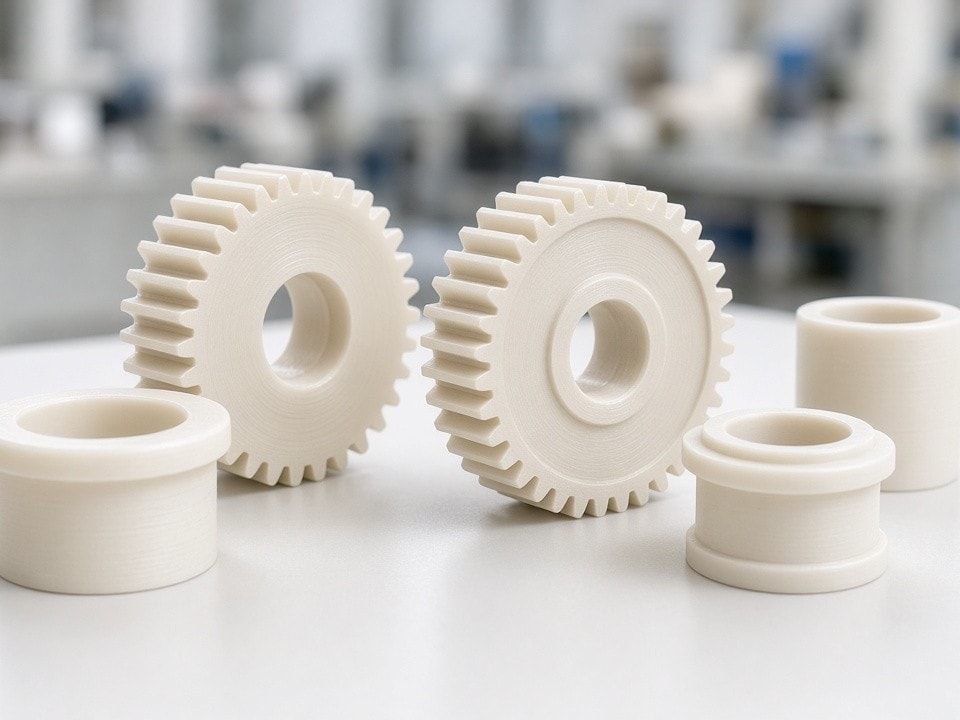
POM-C & Industrial Nylon Machining and Moulding | PartsMake
Source POM-C and industrial nylon wear parts for GCC sites. We machine and mould rollers, wear blocks and pipe supports, with drawing review and DDP delivery.
View details →