
Duplex machining for GCC projects
Duplex & Super Duplex Stainless Machining
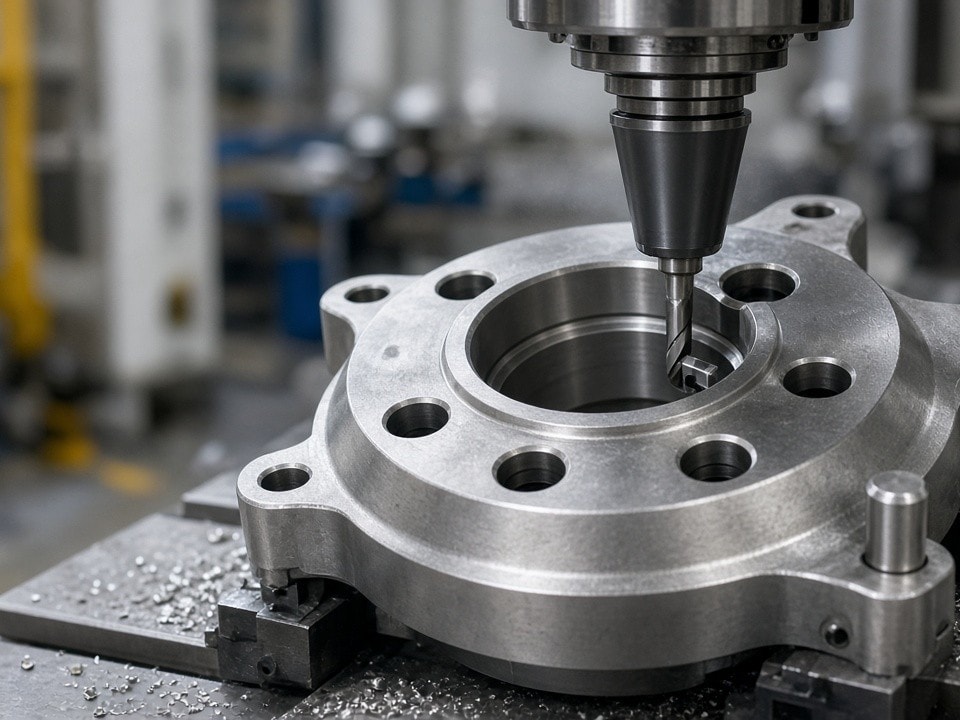
CNC-machined Duplex 2205 and Super Duplex 2507 components for seawater desalination, high-pressure piping, centrifugal pumps and oilfield water-injection systems.
We plan around duplex work-hardening and deep-bore requirements, while protecting the balance of ferrite and austenite phases. Send us your drawing or sample for a manufacturability review and RFQ.
Material selection matters in seawater service
2205 suits many strength and corrosion-resistance requirements. 2507 is used for more severe chloride exposure, with PREN typically specified at 42 or higher, subject to grade chemistry and mill certification.
2205
A practical balance of mechanical strength and corrosion resistance for demanding process-fluid service.
2507
Super Duplex for more severe chloride exposure; confirm chemistry, PREN and project requirements against the material certificate.
Two-phase structure
Ferrite and austenite balance is an important material consideration. PMI verifies elemental composition; it does not verify phase balance.
Production envelopes
CNC capacity for duplex components
We select milling, turning, grinding or a combined mill-turn route around the part geometry and critical features. These are production envelopes, not a substitute for drawing-specific review.
| Process | Available envelope | Standard tolerance | Suitable duplex work |
|---|---|---|---|
| 5-axis simultaneous milling | 1,200 × 1,000 × 800 mm | ±0.005 mm | Impellers, complex valve bodies, manifolds and angled ports |
| Heavy-duty CNC turning | Up to Ø850 × 2,200 mm | ±0.008 mm | Pump shafts, flanges, sleeves and large turned fittings |
| Mill-turn machining | Up to Ø420 × 1,050 mm | ±0.005 mm | Valve blocks, manifolds and parts with turned and milled features |
| Large gantry milling | 3,500 × 2,200 × 1,000 mm | ±0.020 mm | Large plates, bases and fabricated component faces |
| CNC cylindrical grinding | Up to Ø400 × 1,500 mm | ±0.002 mm | Precision journals and sealing diameters |
| Wire EDM | 600 × 400 × 350 mm | ±0.002 mm | Slots and profiles with limited conventional cutting access |
Achievable tolerances depend on part geometry, material condition and inspection method. Applicable requirements are confirmed during quotation rather than assumed for every feature.
Process planning
Deep-bore machining, planned before the first cut
Duplex alloys can work-harden when a tool rubs rather than cuts. For deep holes, we review bore depth and diameter, entry geometry, chip evacuation, tool access and inspection requirements before confirming process and price.
Machining heat and deformation also need managing to limit surface damage and support the specified material condition. Where the required bore needs a specialised process beyond the confirmed setup, we flag it during drawing review.
Keep the tool cutting
Select tooling and cutting conditions to avoid rubbing and unnecessary dwell at the cut.
Plan chip evacuation
Review access and chip exit paths against bore depth, diameter and geometry.
Review sequence and intersections
Consider intersecting passages, drilling sequence, burr risks and inaccessible edges.
Agree inspection points
Identify critical dimensions and surfaces for CMM or other agreed inspection.
Applications
Parts for desalination, pump and oilfield systems
We support high-mix, low-volume production for EPC packagers, system integrators, MRO contractors and regional distributors.
01 / Seawater
High-pressure piping components
Custom fittings, flanges, blocks and machined connection features for large Gulf desalination systems.
02 / Pumping
Centrifugal pump components
Impellers, diffusers, shafts and fluid-handling parts. Impellers can be machined from billet; specify balancing requirements and acceptance criteria in the RFQ.
03 / Oilfield
Water-injection manifolds
Drilled and milled flow passages, ports and connection faces for injection service.
04 / Integrated systems
Valves, wellheads and desalination skids
Bodies, trims, sleeves, replacement parts and machined skid interfaces, made to drawing or approved sample. Fabricated assemblies can combine machined parts and welded modules.
For compact parts with multiple orientations, 5-axis or mill-turn machining can reduce repeated setups and help maintain feature relationships. Larger components may need turning, gantry milling or a staged machining plan.
Quality & fabrication
Documentation, inspection and assembly options
We can align the quality package to the RFQ and agreed acceptance criteria. Specify additional metallurgical verification or a particular standard so availability can be reviewed before quotation.
Material traceability
EN 10204 3.1 certification linked to the material heat or lot, with PMI by XRF or OES to verify alloy chemistry.
Dimensional and NDT records
CMM data for agreed critical features; Level II PT, MT and UT options where required and specified.
Hydrostatic pressure testing
Testing up to 20,000 PSI (1,380 bar), subject to component design, test procedure and agreed acceptance criteria.
Welding and fabrication
Laser cutting, CNC press-brake bending and industrial welding. ASME Section IX and AWS D1.1/D1.6 qualifications are subject to process, material, joint design and project scope.
Important: PMI checks elemental composition; it does not confirm ferrite-austenite phase balance. For fabricated assemblies, include grade, plate thickness, weld details, post-weld requirements, inspection level and applicable code in the RFQ.
Drawing review guide
Match the manufacturing route to the duty
For Gulf seawater applications, specify the exact grade and governing material standard where available. For 2507, state the certification requirements and any PREN acceptance value in the purchase specification.
| Project requirement | Suggested review focus | Information to provide |
|---|---|---|
| Warm, chloride-rich seawater | Compare 2205 and 2507 against the project corrosion specification | Fluid, temperature, pressure and specified grade |
| High-pressure pump impeller | Review geometry, machining access, balance grade and inspection | 3D model, drawing, balance requirement and quantity |
| Deep-bore injection manifold | Assess depth-to-diameter ratio, chip exit path and intersecting passages | Bore sizes, depths, ports and pressure-test criteria |
| Replacement valve or wellhead part | Match drawing revision, material traceability and critical dimensions | Drawing, sample data, material grade and required documents |
| Skid or welded assembly | Define machining, welding, NDT and pressure-test scope | Assembly drawing, weld map, code and inspection plan |
Common questions
Before you send an RFQ
How do I choose between 2205 and 2507?
The correct grade depends on operating conditions, design requirements and the governing project specification. 2205 is commonly selected for a balance of strength and corrosion resistance; 2507 is used for more severe chloride exposure. Confirm the grade and chemistry against the material certificate.
What helps you assess a deep bore?
Provide bore diameters and depths, intersecting passages, finish requirements, allowable deviation and inspection criteria. These details help us review chip evacuation, tool access and the suitable machining route.
Can you support GCC delivery and Saudi documentation requirements?
We support GCC delivery planning, including DDP options to Dammam, Jubail, Riyadh, Dubai, Abu Dhabi and Doha, subject to shipment scope and destination requirements. For Saudi-bound shipments, tell us whether SABER/SASO documentation is required.
RFQ your part
Share your drawing, model or sample details
We will review the manufacturing route, documentation scope and delivery basis before issuing the RFQ. Send your enquiry to PartsMake and include the information listed here.
Company address:
Request a quotationInclude these details for a complete quotation
- 01Grade and material standard, such as 2205 or 2507.
- 02Quantity, target delivery date and delivery location.
- 03Drawing revision, critical tolerances and surface-finish requirements.
- 04Required documents, including 3.1 certification, PMI, CMM, NDT or pressure testing.
- 05Operating pressure and service conditions for pressure-retaining parts or seawater exposure.